Pinotage in Ukraine: how a South African grape found a home on the Black Sea
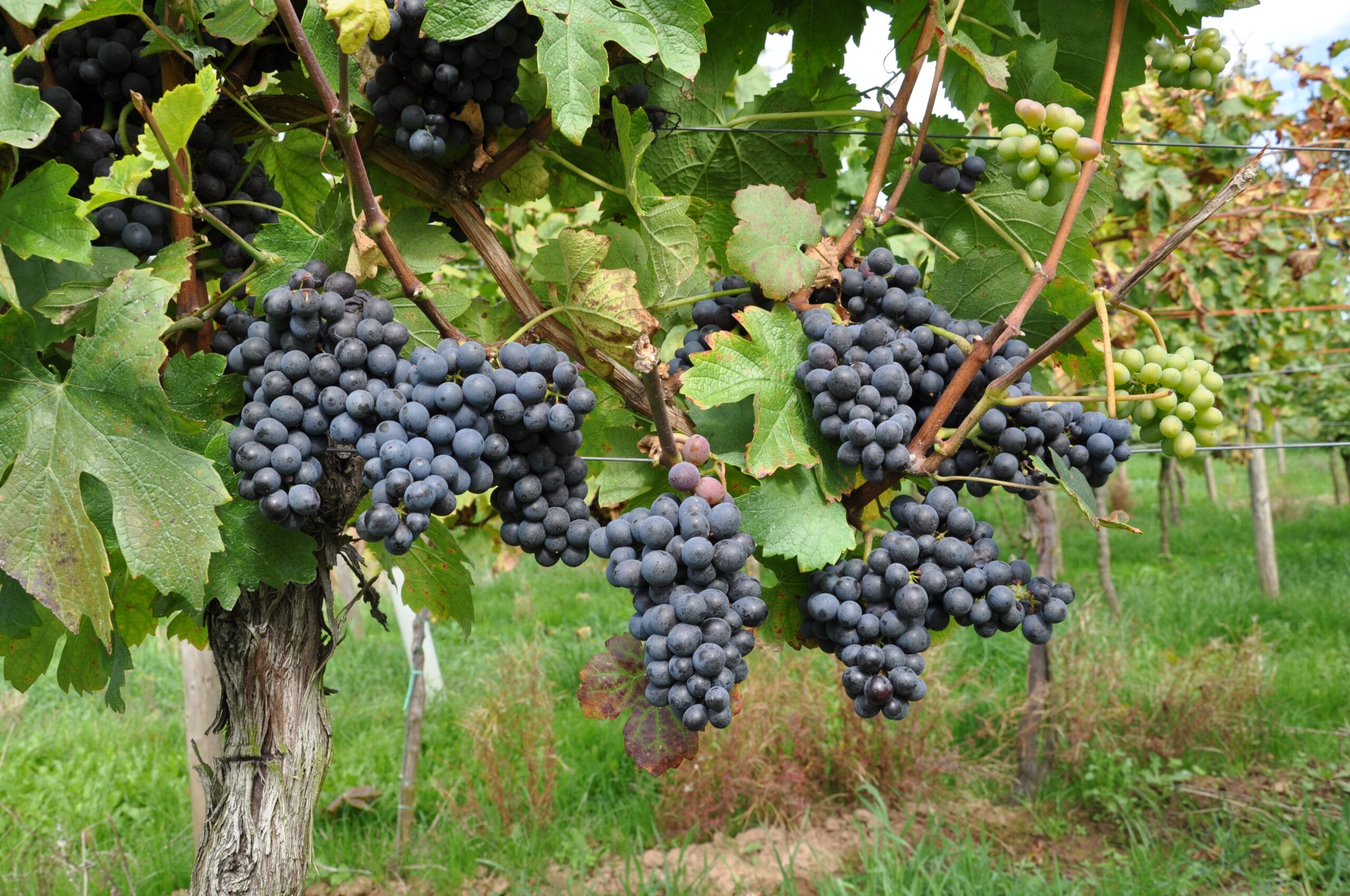
In 1924, Professor Abraham Perold at Stellenbosch University crossed two grape varieties — Pinot Noir and Cinsaut — and created a grape that would become a national symbol. A century later, we grow this variety on a cape between two estuaries of the Black Sea. Pinotage was born South African, but at our winery it found a different terroir, a different climate, a different story. This is the account of how a grape from Cape Town took root on the Black Sea coast and what came of it.
How Pinotage was born: from laboratory to legend
Pinotage was created on 17 November 1924 at the Welgevallen experimental farm in Stellenbosch, South Africa. Its creator was Professor Abraham Izak Perold, the first head of viticulture and oenology at Stellenbosch University. The method was straightforward: Perold pollinated a Pinot Noir flower with pollen from Cinsaut, known in South Africa at the time as Hermitage. The new variety’s name became a portmanteau of its parents: Pino(t Noir) + (Hermi)tage = Pinotage.

The logic behind the cross was pragmatic. Pinot Noir produces wines of remarkable aromatic complexity, but the variety is temperamental: thin-skinned berries are prone to rot, and the vine is demanding about climate. Cinsaut is its opposite — hardy, productive, thick-skinned, and disease-resistant. Perold wanted a variety that would combine the elegance of the former with the resilience of the latter. In 1925, he planted four seeds in his garden.
Then he nearly lost everything. In 1927, Perold left the university for a position at KWV in Paarl and forgot about his experiment entirely. He left no notes, no instructions for colleagues. When the university sent a crew to clear the neglected garden, the four inconspicuous seedlings were destined for destruction. They were saved by chance: Dr Charlie Niehaus, a young lecturer cycling past, spotted the seedlings and took all four to the nursery at Elsenburg Agricultural Training Institute.
Perold died in 1941 — the same year the first Pinotage wine was made at the Elsenburg research station. He never tasted the wine from the grape he had created. Recognition came slowly: the first commercial vintage from Bellevue estate won the General Smuts Trophy at the National Young Wine Show in 1959. And the first bottle labelled “Pinotage” — the legendary Lanzerac — appeared only in 1961.
In 1935, South Africa signed the so-called “Crayfish Agreement” with France: France would import South African crayfish, and South Africa agreed to stop using French geographical names for its wines. The name “Hermitage” became unacceptable — and the portmanteau “Pinotage” proved not only apt but legally convenient.
From Cape Town to the world: the geography of Pinotage
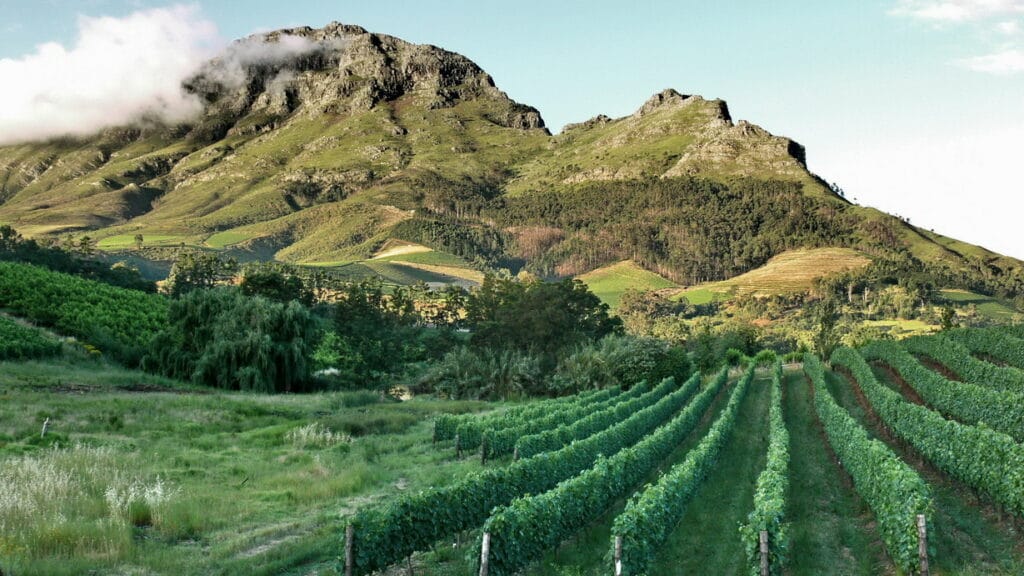
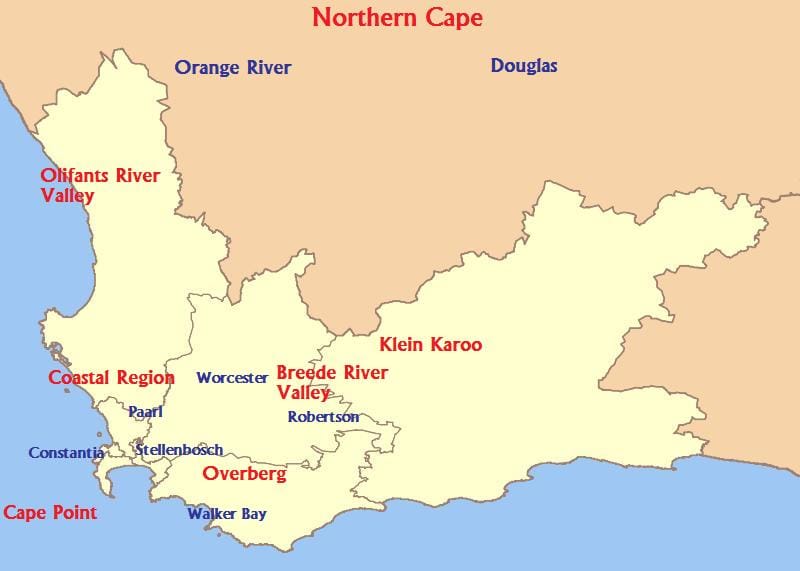
Despite its centennial history, Pinotage remains predominantly a South African variety. Of the approximately 7,100 hectares planted globally, around 6,500 are in South Africa, where it ranks as the third most planted red grape after Cabernet Sauvignon and Shiraz. The main growing regions are Swartland (the largest area), Paarl, and Stellenbosch. In South Africa, Pinotage holds the status of a national variety and is a mandatory component of “Cape Blends” — cuvees in which it comprises 30 to 70 per cent.
Beyond Africa, the first country to adopt Pinotage was New Zealand. As early as 1964, Corbans produced the first vintage outside South Africa. The United States has roughly 20 hectares in California, with additional small plantings in Arizona and Virginia — 27 wineries in total work with the variety. Israel and Brazil also have small plantings of their own.
In Europe, Pinotage remains a rarity. Small plantings exist in Germany and Switzerland. In Luxembourg, Domaine Schumacher-Knepper uses Pinotage as a blending component. The United Kingdom has experimental plantings. But a single-varietal Pinotage wine — released as a distinct product with clear varietal identity — is hard to find among European producers. Most use the grape only for blends or maintain a handful of vines without commercial bottling.
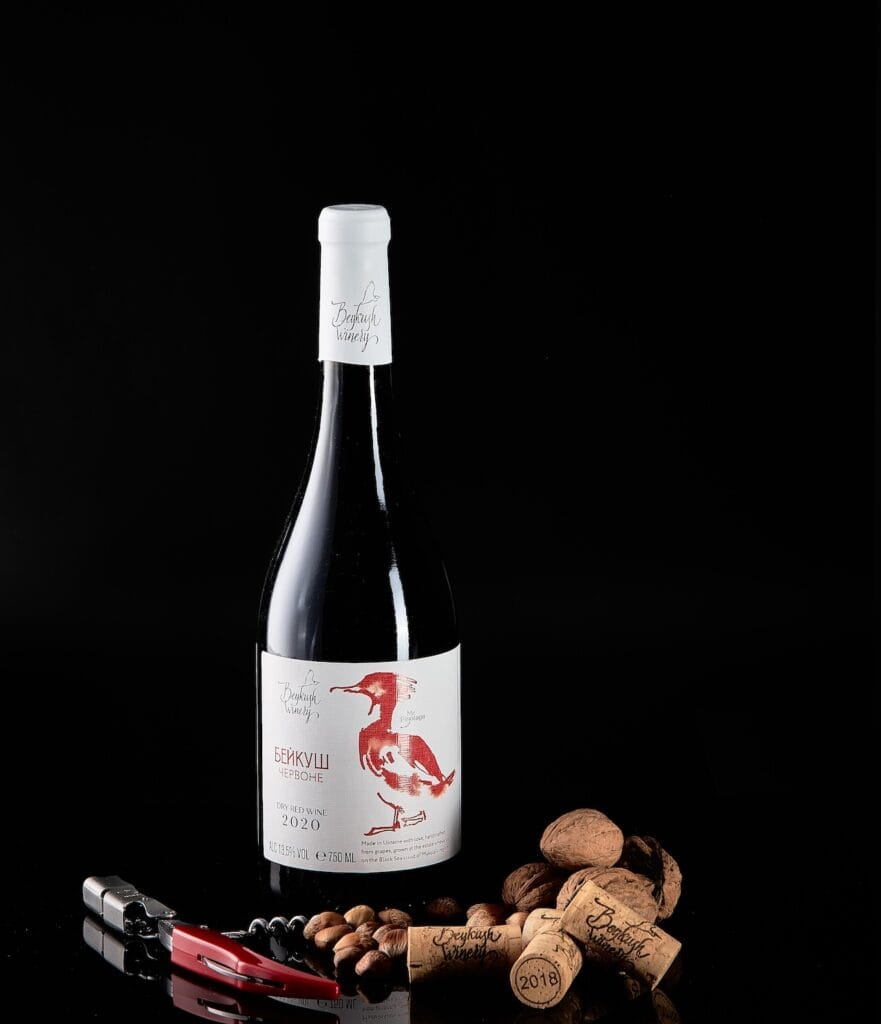
Our Beykush Red is one of the rare examples of a European single-varietal Pinotage: 100% of the variety, 5,200 bottles per year, a standalone product in our range rather than an experimental barrel in the cellar.
Black Sea terroir for a South African grape
When we brought Pinotage cuttings from South Africa and planted them on a site between the Buzskiy and Berezanskiy estuaries, the obvious question arose: would a variety from a Mediterranean climate take to the steppe coast? The answer proved more nuanced than a simple yes or no — Pinotage did not merely survive, it produced a wine with a character markedly different from the classic South African expressions.
From its parent varieties, Pinotage inherited a fortunate combination: from Pinot Noir, aromatic depth; from Cinsaut, a thick skin, resistance to rot, and the ability to adapt to diverse climatic conditions. The variety needs warmth for full ripening but cannot tolerate excessive heat — too hot a climate yields overripe, uninteresting grapes, while cool conditions prevent the berries from achieving full phenolic maturity. The ideal is warmth by day, coolness at night, well-drained soil, and moderate wind.
Our vineyard delivers precisely that, though by a different mechanism than Stellenbosch. The proximity of two estuaries and the Black Sea creates a buffer zone: sea breezes moderate peak summer temperatures and soften spring frosts. Dark chestnut loamy soils provide natural drainage — a critical requirement for Pinotage, which does not tolerate waterlogging. The constant wind off the sea offers natural protection against fungal diseases, reducing the need for chemical treatment.
Comparing our terroir with Stellenbosch — the classic Pinotage region — reveals both parallels and contrasts. Both terroirs enjoy maritime influence that moderates temperature extremes: there, it is the breezes of the Atlantic and False Bay; here, the Black Sea and the estuaries. But the soils differ fundamentally: in Stellenbosch, decomposed granite; at our winery, loam over a chernozem base. The harvests are separated by half a year: they pick in February and March; we harvest at the end of September. It is precisely these differences that make Black Sea Pinotage a distinct phenomenon. Different soil imparts a different mineral profile. A different length of daylight and a different temperature regime shape the balance of sugar, acidity, and tannin.
How we make Beykush Red: steel instead of oak
We hand-pick the grapes at the end of September, when the berries reach optimal phenolic ripeness. After manual sorting on the table, the grapes are crushed and sent for fermentation in stainless steel tanks. We maintain fermentation temperature at 22°C — this preserves aromatic freshness and avoids the harsh, aggressive tannins for which Pinotage is notorious when extraction goes wrong.
Once alcoholic and malolactic fermentation are complete, the wine is pressed, settled, racked, and aged in stainless steel tanks for five months. And here is the pivotal decision: no oak barrels whatsoever. This is a deliberate winemaking choice, not a constraint.
To understand why this matters, some context is useful. Traditionally, Pinotage in South Africa underwent extended oak ageing — that is the origin of the classic vanilla, coffee, chocolate, and toast notes. Some producers were so enamoured with barrel influence that the varietal character disappeared behind the oak. Over the past decade, however, a movement known as the “new wave of Pinotage” has emerged in global winemaking: gentler extraction, less or no oak at all, with an emphasis on pure fruit expression. Wineries like Radford Dale now make Pinotage using techniques closer to Pinot Noir — prioritising elegance and vibrancy.
Our approach — ageing exclusively in stainless steel — takes this further. Without oak influence, the wine conveys terroir in its most direct form: you taste the grape and the soil, not the barrel. For a Pinotage grown in conditions atypical for the variety, this is a principled choice — we wanted to discover what the Black Sea terroir would say when given the chance to speak without intermediaries. The result is a wine with a purer fruit profile and brighter acidity than the classic South African examples.
Flavour profile and food pairing
A typical Pinotage offers a spectrum from red berries (cherry, raspberry, wild strawberry) to dark fruits (plum, blackberry, dark cherry), with a distinctive banana note that is considered one of the variety’s markers. Oak-aged versions add vanilla, coffee, and tobacco. With five or more years of ageing, Pinotage develops complex notes of leather, smoked meat, and earthiness.
Beykush Red, born without an oak barrel, unfolds differently. The fruit profile is cleaner and more immediate — red berries above all, rather than oak cosmetics. The acidity is brighter, making the wine refreshing even at 13% alcohol. The terroir character emerges more clearly: behind the fruit you sense the mineral foundation imparted by the loamy soils and estuary breezes.
Pinotage is a versatile food partner, particularly with dishes that carry a bold, meaty flavour. In South Africa, the classic pairing is grilled boerewors (local sausage), kebabs, and pepper-crusted steak with smoky sauce. This principle translates beautifully to Ukrainian cuisine: shashlik, homemade grilled sausage, holubtsi (stuffed cabbage rolls) with a meat filling — anything with a substantial meaty character and a touch of smokiness from the fire.
A less obvious but successful pairing is borshch with beef: the earthiness of beetroot and the richness of the meat broth find balance with Pinotage’s fruitiness and moderate tannins. Grilled vegetables — aubergine, pepper, courgette — also work well, especially with a light charred crust. For those who favour spicy food, Pinotage handles spice with ease, from classic biryani to a robust bograch stew.
Serving temperature matters: we recommend 15–18°C, slightly below room temperature. In warm weather, you can chill the bottle in an ice bucket for ten to fifteen minutes — the acidity’s freshness only benefits.
Summary
Pinotage is a variety with a dramatic biography: created in a laboratory, saved from destruction by a passer-by on a bicycle, never tasted by its creator. Over a hundred years, it has travelled from four seedlings in a neglected garden to approximately seven thousand hectares of vineyards across four continents. We became part of this story by planting Pinotage on the Black Sea coast and choosing an approach that allows terroir to speak unadorned — ageing in steel rather than oak, pure varietal character instead of barrel cosmetics. Beykush Red is one of Europe’s rare single-varietal Pinotages. Each vintage is an observation of how a South African grape interprets the steppe climate, estuary breezes, and loamy soils of the Black Sea littoral.