
Orange Wine: What It Is, How It’s Made, and Why It Became a Trend
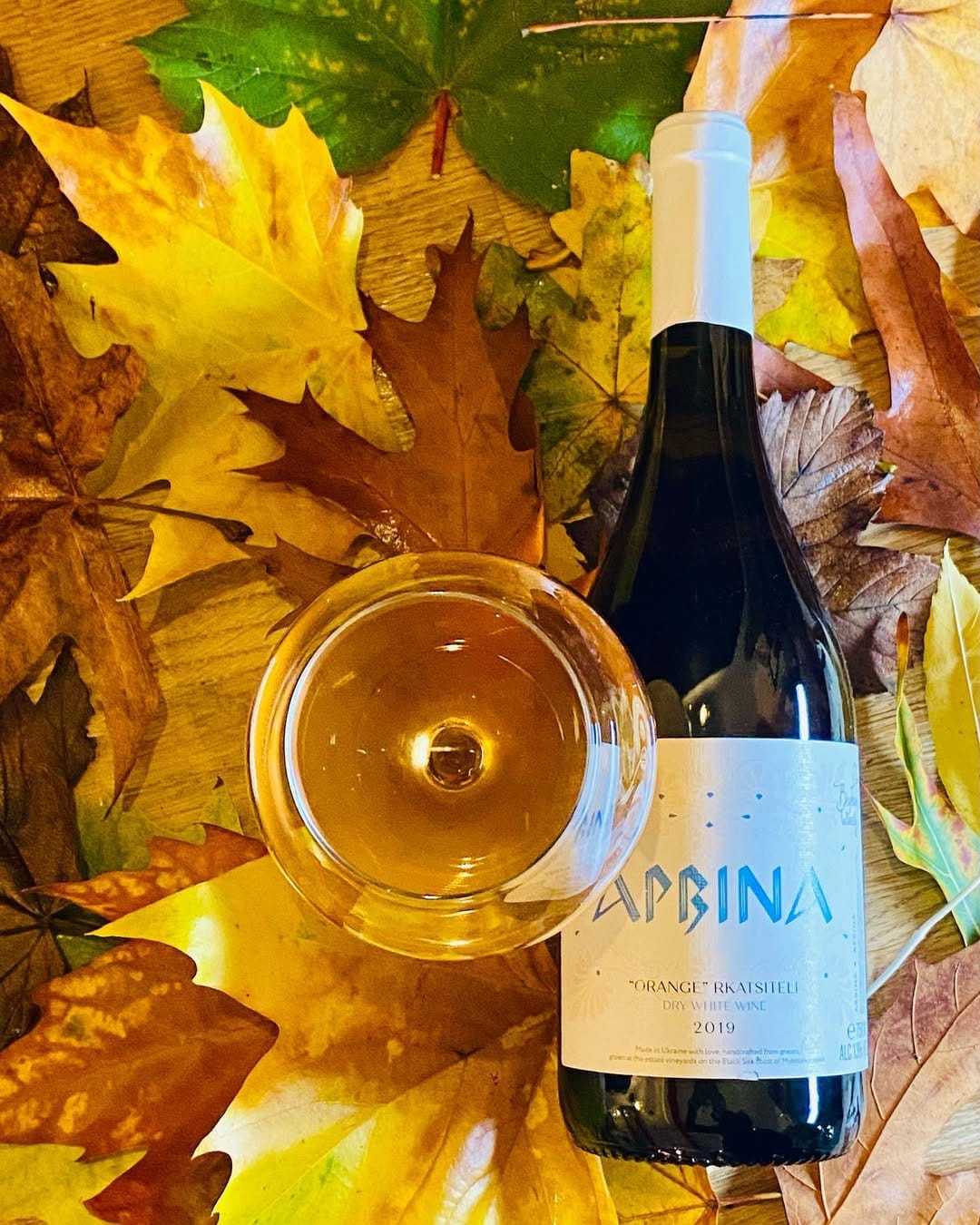
Yellow, amber, copper — these aren’t names of new cocktails. This is orange wine, one of the hottest trends in contemporary wine culture. Yet what people call a “trend” today is actually a return to the oldest winemaking technique in the world. When you hold a glass of orange wine, you’re holding thousands of years of winemaking memory. At Beykush, we know this not from theory — we have been producing orange wine since the 2014 vintage, making us one of the earliest Ukrainian producers of this style. Every bottle of our Arbina is a direct dialogue with that tradition.
What Is Orange Wine: White Wine Made Like Red
Orange wine (also known as skin-contact wine or amber wine) is a wine made from white grapes using red wine techniques. The key difference from conventional white wine: when making orange wine, the juice is not separated from the grape skins immediately after crushing. Instead, the skins, seeds, and sometimes the grape stems remain in contact with the must for anywhere from a few days to several months. This process is called maceration, or skin contact.
It is during maceration that orange wine develops its defining characteristics:
- Colour — from golden yellow to deep amber and copper, depending on how long the skins remain in contact
- Tannins — structure and a gentle grip absent from conventional white wines
- Aromas — deeper, more complex notes: dried fruits, nuts, spice, flowers, sometimes tea or oak bark
- Texture — full-bodied and dense, with a characteristic “chewy” quality
The term “orange wine” gained traction in the early 2000s, coined by British wine importer David Harvey, who needed a simple label for a product new to the market. Georgians, who preserved this tradition uninterrupted, traditionally call their wines amber — a name that more accurately reflects the wine’s actual hue.
Eight Thousand Years Before the Cellars of Friuli: The True History of Orange Wine
Orange wine is not a fashionable novelty. It is the oldest known winemaking method. Archaeological evidence from Georgia — particularly excavations at the site of Gadachrili Gora — confirms that people were fermenting white grapes together with their skins in large clay vessels called qvevri as far back as 8,000 years ago. Modern “white wine,” where the juice is immediately separated from the skins, came much later: it is a technological innovation compared to the ancient technique of skin contact.
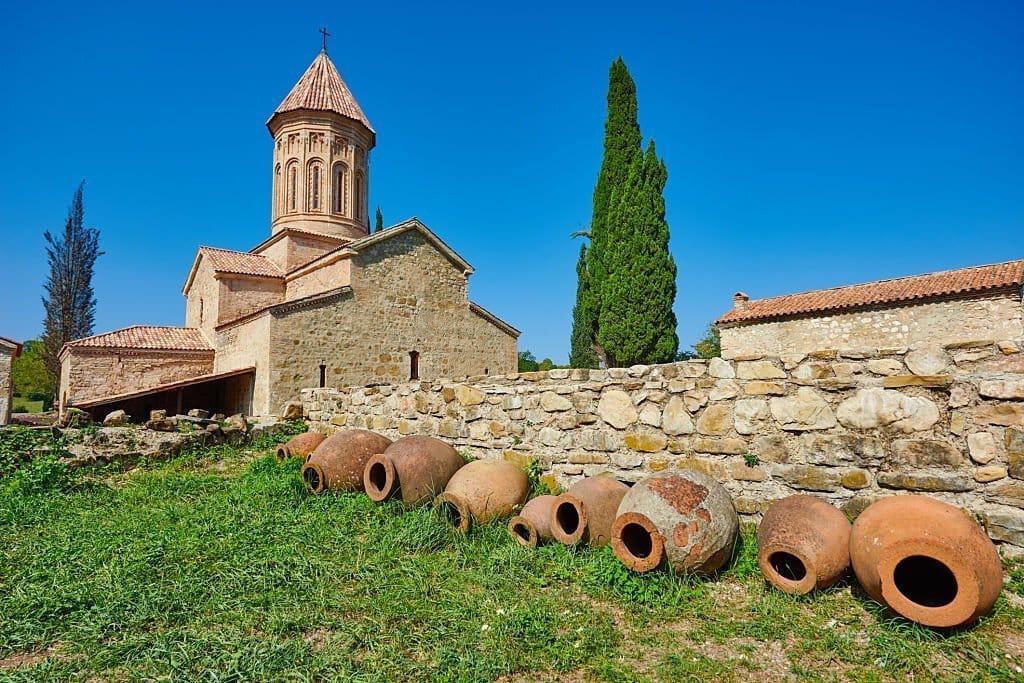
Georgia never fully abandoned this tradition. Winemaking in qvevri has continued there for millennia without interruption, and in 2013 it was inscribed on UNESCO’s list of Intangible Cultural Heritage. For the rest of the world, however, orange wine became a “new discovery” only in the late 20th and early 21st centuries.
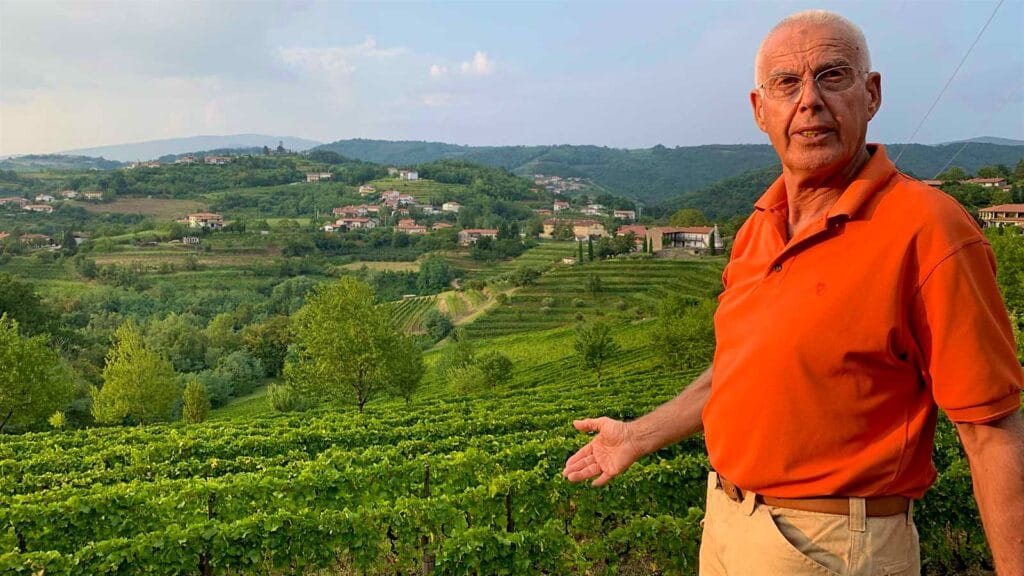
The revival originated in the Italian-Slovenian border region of Friuli-Collio. In 2000, winemaker Joško Gravner visited Georgia and brought back the first qvevri to his estate in Oslavia. His new wines — extended skin maceration, aging in clay amphoras — initially shocked critics but went on to influence an entire generation of winemakers worldwide. Simultaneously, Slovenian producers from the Vipava Valley and Karst regions were reviving their own skin-contact traditions. Together, they set off a wave that reached Australia, the United States, Japan — and Ukraine.
How Orange Wine Is Made: From Vineyard to Bottle
The technology behind orange wine is detailed but easy to understand once compared to more familiar processes.
Step 1. Harvest. For orange wine, ideal grapes must be fully ripe and healthy — free from rot and damage. Most producers hand-harvest, as this allows careful selection of individual clusters.
Step 2. Crushing. The berries are crushed, but the skins are not separated. The mass — a mixture of juice, skins, seeds, and sometimes stems — goes directly into the fermentation vessel. This is where orange wine diverges from white: in conventional white wine production, the skins are immediately pressed off and the juice ferments alone.
Step 3. Maceration and fermentation. The skins remain in contact with the must. The duration of maceration ranges from a few days to six or even twelve months. The longer the contact, the more tannins, pigments, and complex aromatic compounds are extracted into the wine. Fermentation proceeds in parallel: yeasts (wild or added) convert sugar into alcohol.
Step 4. Pressing. Once maceration is complete, the wine is separated from the skins by pressing. The resulting wine carries its characteristic deep colour and structure.
Step 5. Aging. Most orange wines are aged for anywhere from several months to several years — in neutral oak barrels, clay amphoras, concrete vessels, or combinations thereof. Aging deepens complexity, softens tannin grip, and allows the wine to “come together” and reveal its character.
Step 6. Bottling. Orange wines are rarely filtered and often carry a light natural sediment — this is entirely normal and signals minimal intervention in the winemaking process.
An important nuance: there is no single “correct” orange wine. Producers vary maceration length, vessel type, grape variety composition, and many other parameters. This is why orange wine is an exceptionally broad category — from a light golden wine with 48-hour skin contact to a rich copper wine with 12 months of maceration.
The Role of Amphoras in Orange Wine Production
Among the vessels used in orange wine production, clay amphoras hold a special place. They allow for very gentle micro-oxygenation through the ceramic’s pores — without the additional oak notes contributed by barrels. The wine “breathes,” oxidises slowly, develops over time — and yet retains its acid freshness and clean fruit profile.
Georgian qvevri are buried in the earth and sealed with beeswax. Spanish tinajas are made from Catalonian clay and positioned upright. Italian concrete amphoras are a more recent variant, free from oak-derived tannins. Each type imparts its own character to the wine.
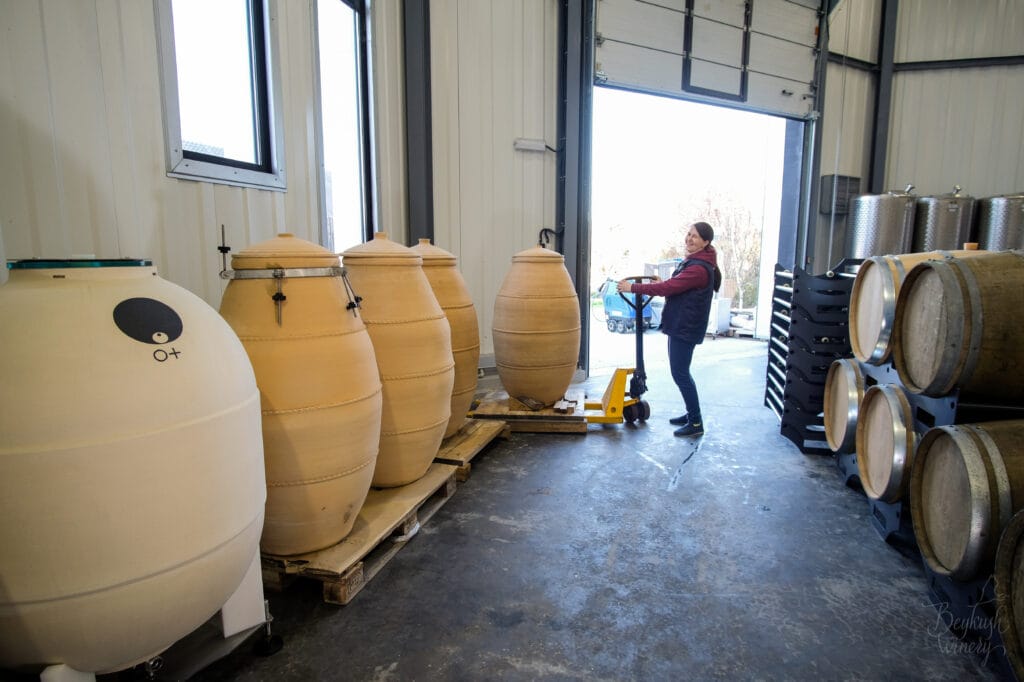
At Beykush, we work with several vessel types. Our Amphora Rkatsiteli ferments and ages in 400-litre Catalonian tinajas from the workshop of Cantereria Josep Jornet — each one handcrafted. For Arbina, we combine concrete amphoras by Drunk Turtle (for the fresh-pressed fraction) and clay amphoras by master Joan Miró (for the dried grapes).
Beykush and Orange Wine: We Started in 2014
Orange wine reached Ukraine alongside the global natural wine movement — but not every winery chose to produce it. Beykush made that commitment starting with the 2014 vintage, becoming one of the earliest Ukrainian producers of orange wine. This is not a marketing claim — it is a decision rooted in our understanding of our terroir and our conviction in the power of ancient methods.
Our orange wine — Arbina — is made from 100% Rkatsiteli (Ркацителі), one of the oldest cultivated grape varieties in the world, originating from Georgia. The variety choice is not incidental: Rkatsiteli was cultivated for millennia specifically for skin-contact winemaking in qvevri. On the shores of the Black Sea, it receives a new reading — but the underlying logic remains the same.
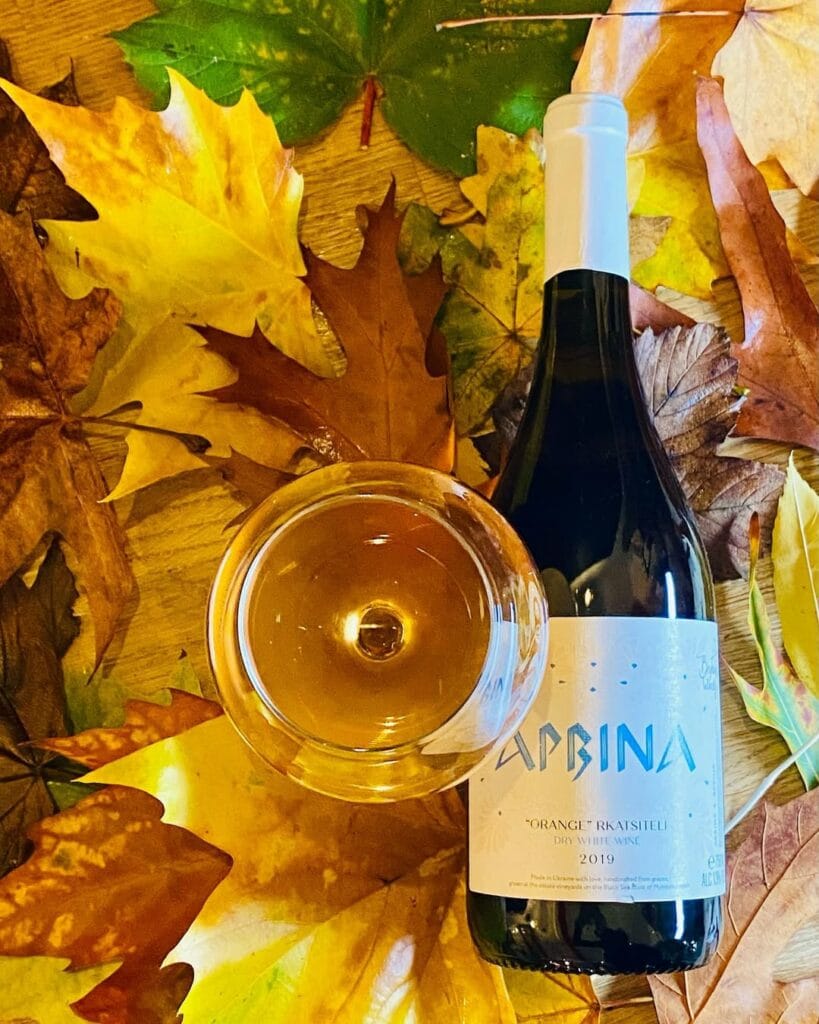
The name “Arbina” belongs to an ancient Greek settlement of the first millennium BC, located on Berezan Island near our winery. This name is another thread connecting orange wine to its ancient Mediterranean roots: the Greeks brought amphora wine to these very shores.
Arbina’s production process is extraordinarily complex. 40% of the harvest is dried in special containers to 270 g/l sugar using the appassimento technique; the remainder is processed fresh. The two fractions ferment separately: the fresh grapes in concrete amphoras, the dried fraction in clay amphoras and small open-top oak casks, both with one month of maceration. After pressing and settling, all batches are aged separately in French and American oak barrels for 27 months. Only then does the winemaker assemble the final blend. Total production: 2,450 bottles.
Worth mentioning separately is our Amphora Rkatsiteli — another orange wine, where fermentation and maceration last one month in Catalonian tinajas, after which the wine returns to the amphoras for a further six months aging on fine lees. This is a more open, approachable wine — an excellent first step into the world of orange wine.
What to Eat with Orange Wine: The Gastronomy of Skin Contact
Orange wine is one of the most food-friendly wine styles. Its tannic structure, lively acidity, and complex aromas allow it to stand up to spicy, rich, fermented, and fatty food that would overwhelm a conventional white.
Seafood and fish. A classic combination, and particularly relevant for us — Beykush sits on the Black Sea coast. Orange wine alongside fried mackerel, mussels in cream sauce, baked catfish, or fish soup: these pairings hold up in practice. The tannins and acidity cut through fat and accentuate the briny, iodine character of the fish.
Aged cheeses. Comté, Manchego, old Gouda, firm Ukrainian cheeses — the fermented complexity of orange wine harmonises beautifully with the caramel and nutty notes of aged cheese.
Spiced dishes. Georgian cuisine (khinkali, chakapuli, pkhali) is the natural partner for orange wine — unsurprisingly, since the wine and the cuisine were born in the same tradition. But Middle Eastern, Indian, and Moroccan dishes with turmeric, cumin, and coriander work just as well.
Fermented foods. Miso, kimchi, sauerkraut, pickled onions — orange wine holds its own here where white wine would simply fold. Tannin and natural acidity act as counterweights to sharp, pungent flavours.
Roasted and grilled vegetables. Baked aubergine, grilled courgette, roasted root vegetables with cumin and paprika — orange wine loves dark, caramelised, smoky flavours from vegetable dishes.
The general principle: if a dish demands more “chewiness” and richness than a conventional white can provide — try orange. It will fill that gap.
Why Orange Wine Became a Trend — and Whether It Will Stay One
Orange wine broke into mainstream culture in the late 2010s and shows no sign of retreating. Demand for skin-contact wines continues to grow: on Instagram, restaurant menus, and in natural wine shops, orange wine has become a marker for those seeking something beyond the familiar.
There are several reasons for its popularity. First, visual distinctiveness: amber colour in a clear glass is instantly recognisable aesthetic. Second, gastronomic versatility: orange wine bridges the gap between white and red, opening up new pairings. Third, authenticity: at a time when consumers are seeking the genuine and non-industrial, a wine with a millennial tradition and minimal winemaker intervention draws people naturally.
But above all: orange wine is very honest. Skins don’t lie. Maceration reveals the character of variety and terroir without embellishment. If the grapes are good and the winemaker knows their craft — the orange wine will be compelling. That is precisely what we try to demonstrate in every bottle of Arbina.
In Conclusion: Drink Slowly, Think Deeply
Orange wine is a meeting point between ancient tradition and contemporary winemaking thought. Skin contact, maceration, amphora — words that carry thousands of years of experience. At Beykush, we have been producing orange wine since 2014, and each harvest confirms: this method allows our Black Sea terroir to speak at full volume.
If you have not yet tried orange wine — start with our Amphora Rkatsiteli: it is more approachable in style and beautifully demonstrates what skin contact looks like on Black Sea Rkatsiteli. For those ready for greater complexity — Arbina will reveal the full depth of what can be drawn from 27 months in oak, one month of maceration, and partial appassimento. Drink slowly. Think deeply. Orange wine is worth it.